#week 9 — Correctness, Change Detection & Graph Integrity (Final CodeAtlas Blog)

Week 9 was not about adding new features to CodeAtlas.
It was about making the system trustworthy.
This week focused on correctness — the kind of engineering work users never see, but that prevents silent data corruption, infinite loops, and 3:00 AM production failures. It was about validating assumptions, enforcing constraints, and fixing issues that only emerge when a system is viewed as a whole.
This post also marks the final chapter of the CodeAtlas project.
1. Idempotent Change Detection with an Alternative Pipeline 🔁
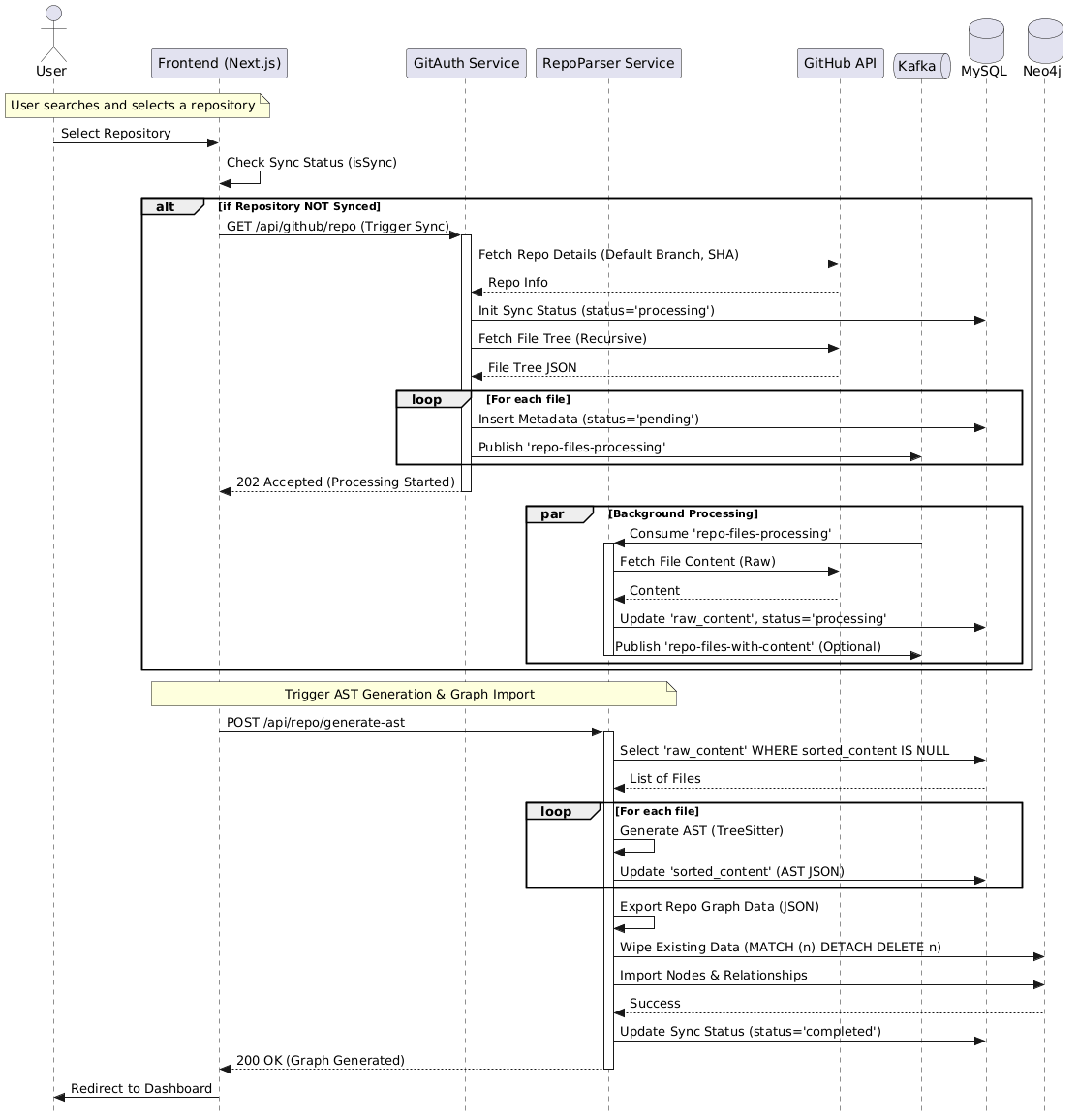
One of the most important improvements this week was introducing an alternative validation pipeline to detect changes before syncing data into the database.
Previously, files could be processed and re-ingested without verifying whether their content had actually changed. While functional, this approach risked redundant writes and unnecessary pipeline execution.
What Changed
Added a hash-based comparison step
Incoming files are checked against existing database records
If hashes match:
The pipeline exits early
The Sync button is disabled
Sync is only enabled when a real content change is detected
Why This Matters
This change enforces idempotency.
Running the same operation multiple times now produces the same system state unless the underlying data has truly changed. By turning idempotency into both a backend guarantee and a frontend signal, the system prevents accidental duplication and unnecessary processing.
This small architectural decision significantly improved:
Data integrity
System predictability
User confidence in sync operations
2. Living Documentation with Notebook LLM 📊
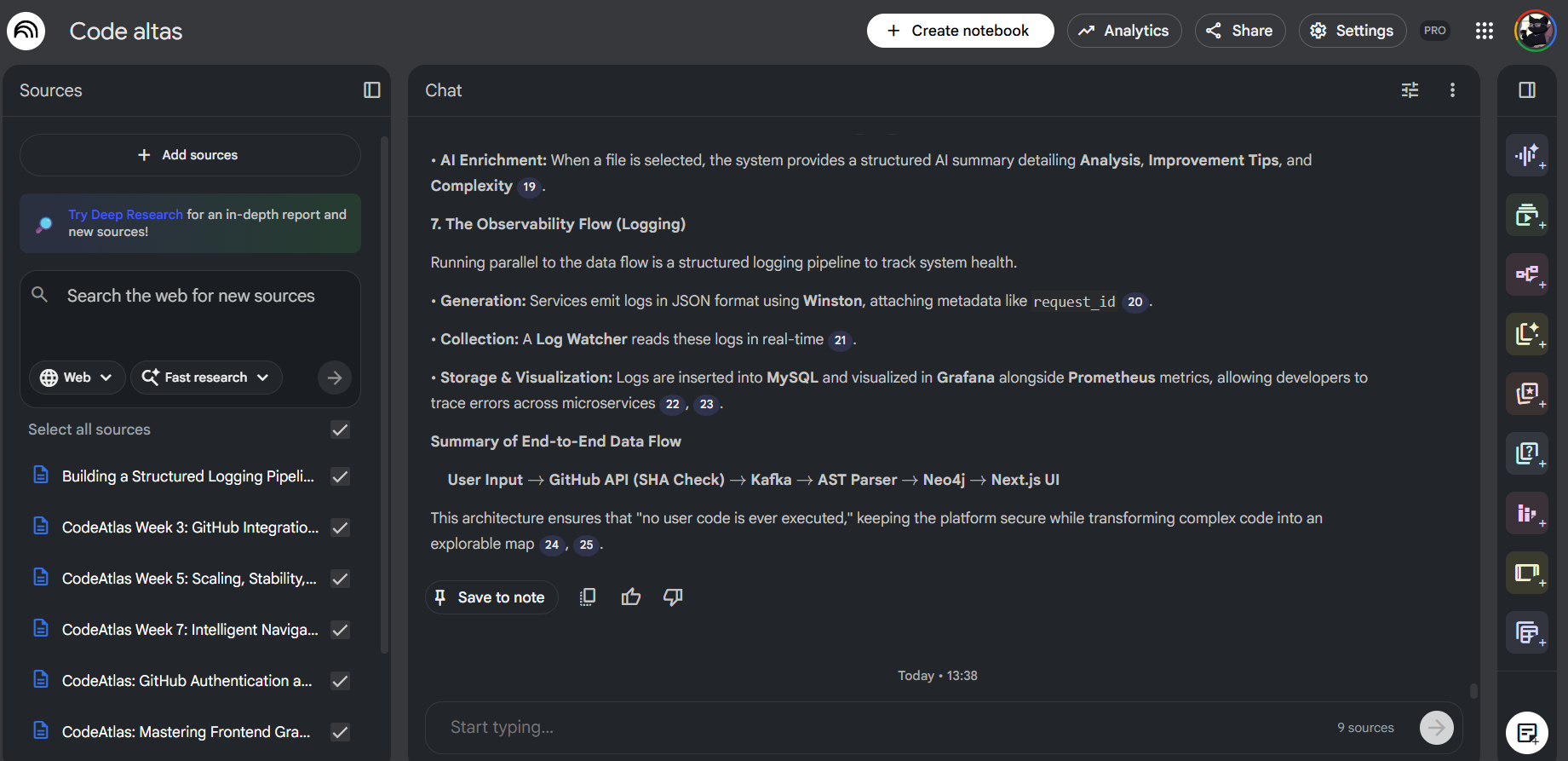
This week also marked the beginning of automated report generation.
Instead of manually compiling documentation, I started using Google’s Notebook LLM as a synthesis layer — not a content generator.
Approach
All previous weekly blogs were treated as the source of truth
The LLM analyzes:
Architectural decisions
System evolution
Technical challenges and tradeoffs
The output is a structured, project-specific report grounded in real development history
This turns documentation into a living artifact — one that evolves alongside the system rather than being written retroactively.
The key insight here was using LLMs for knowledge consolidation, not invention.
3. Graph Explosion Bug — When Validation Is Missing 🕸️
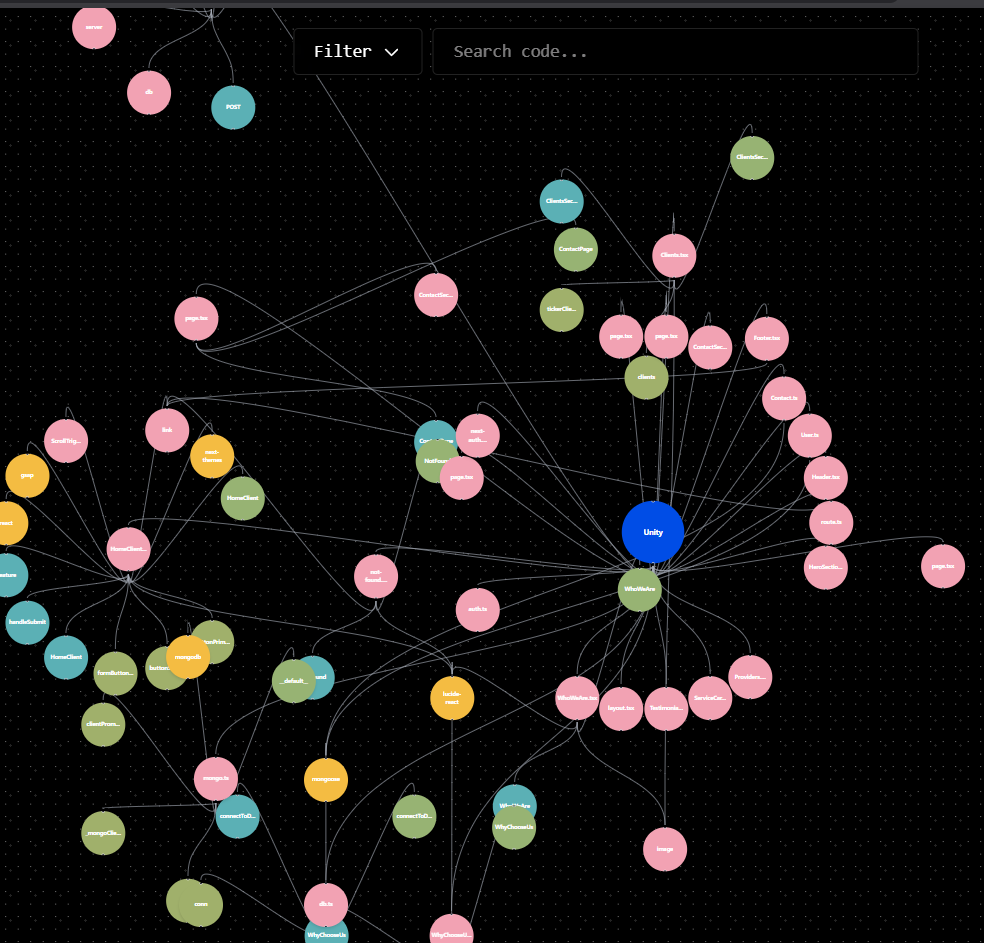
During final system checks, I discovered a serious flaw in the graph layer.
The Problem
Nodes were being created correctly
External relationships were not validated
This caused:
Multiple nodes representing the same file
Recursive graph expansion
Infinite node creation during traversal
The issue was not node creation — it was missing identity and relationship constraints.
The Lesson
Graphs are unforgiving systems.
Without:
Node uniqueness guarantees
Edge validation
Cycle detection
small logic gaps scale exponentially. What starts as a minor oversight quickly becomes a performance and correctness failure.
This bug never appeared during isolated testing — it only surfaced when the graph was exercised as a complete system.
Design Patterns for Scale — Final Takeaways
State Integrity: Enforce idempotency using hash-based change detection and early-exit pipelines
Grounded Documentation: Use LLMs as synthesis tools anchored to a clear source of truth
Graph Constraints: Identity, relationship validation, and cycle detection are non-negotiable
Integration Reality: The most dangerous bugs appear only when systems are fully connected
CodeAtlas reinforced a core engineering truth:
Real problems don’t show up in isolated components — they appear when everything finally works together.
Closing Note — Wrapping Up CodeAtlas 🚀
This blog marks the final update of the CodeAtlas project.
From next week onward, I’ll be shifting focus to:
While CodeAtlas has concluded, the lessons around correctness, validation, and architectural discipline will carry forward into everything that follows.
If you’d like to follow upcoming work or future projects, feel free to follow the GitHub repository — that’s where the next chapters will unfold.
Thank you to everyone who read along, reviewed the work, and shared feedback throughout this journey.
🤝 Contributions
Ideas, improvements, and suggestions are always welcome.
You’re encouraged to submit issues or pull requests to help evolve the platform.